Call for Papers
14th Living Space and Social Life: Theory and Proactice
Theme: Indigenous Knowledge, Local Initiatives, and Global Alternatives
Date June 15-18, 2026 | Venue: Chaoyang University of Technology, Taichung City, Taiwan
Co-organizers
4C5M Studio
Chaoyang University of Technology, Taiwan
SUNY Oneonta, Sociology, Human Services and Crime Studies, Oneonta, NY, USA
Laurentian University, Sudbury, Ontario, Canada
Tour
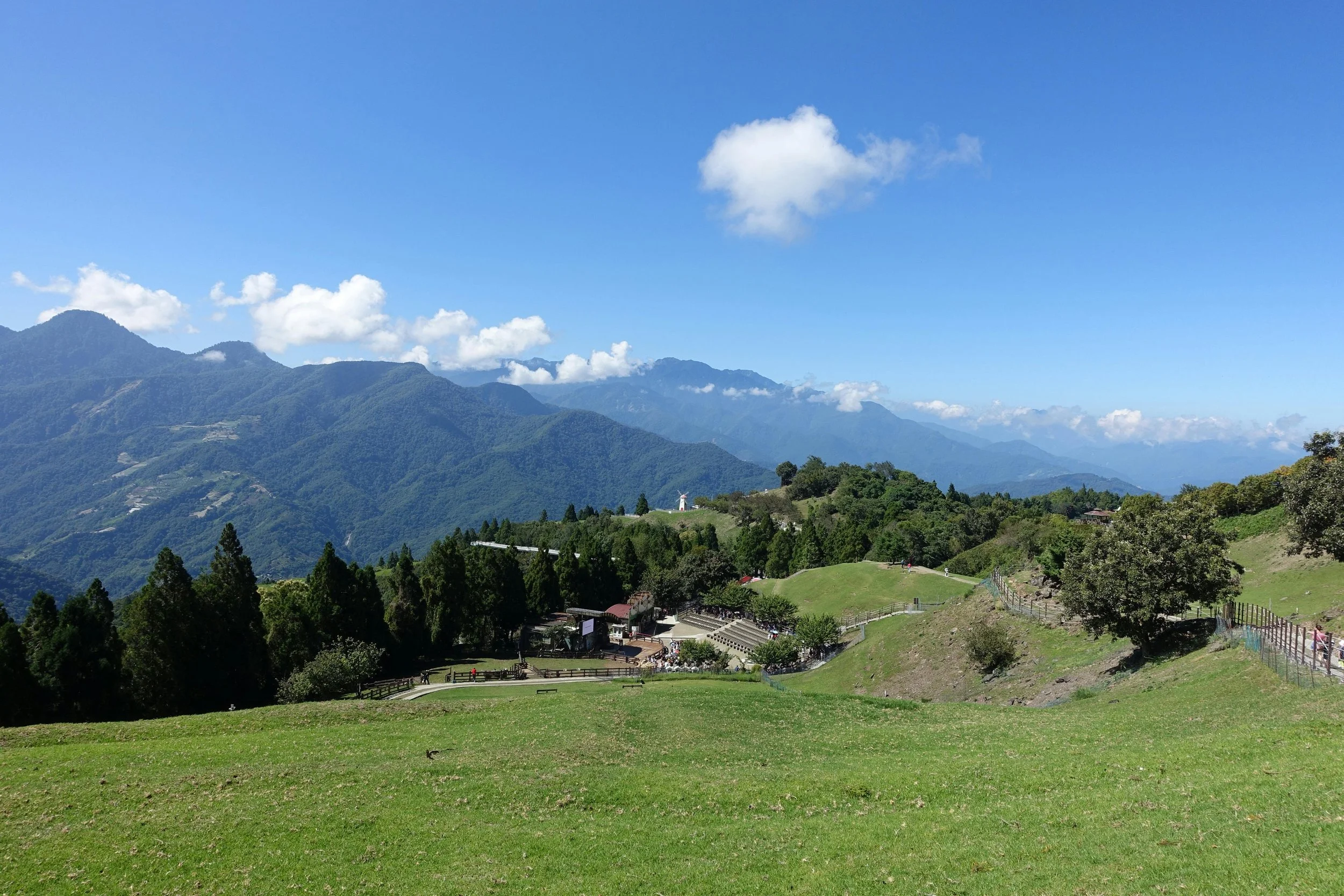
Daguan Tribe*1, nestled along the Daan River in the mountainous Heping District of Taichung City. Surrounded by breathtaking natural landscapes, the tribe is home to the Atayal people, whose rich cultural heritage remains deeply integrated into everyday life.
New & Permanent Feature
Future leaders (age 8-18) are welcome to (co)present their views, everyday experiences (including their participation in the conference), their research and beyond. Three children (co)presented at the 12th and 13th conferences.
Conference Theme & Publication*2
In an era of planetary crisis, rapid urbanization, forced migration, and widening social inequalities, the meaning of living space is undergoing profound transformation. Living space is not merely physical infrastructure or housing provision; it is a relational field—where social life, cultural memory, ecological knowledge, and political struggles intersect.
Taking the next step from pervious 4C5M Studio conferences, the 14th conference in Taiwan invites scholars, partitioners, professionals, artists, community leaders and future thinkers (age 8-18) to rethink living space through the lens of Indigenous Knowledge Systems (IKS), local initiatives, and global sustainability which could become glocal alternatives. We aim to foreground place-based wisdom, community-led innovation, and pluriversal approaches to sustainability that challenge homogenizing global models of development.
We seek to explore how local knowledge, cultural practices, and grassroots initiatives generate viable alternatives to dominant urban, economic, and social paradigms. How can indigenous epistemologies reshape living space? What forms of social life emerge when communities reclaim space as relational, ecological, and intergenerational?
Call for paper
We invite paper proposals, panel sessions, roundtables, workshops, and creative submissions that critically examine the intersections of living space and social life through Indigenous, local, and alternative frameworks.
We particularly encourage interdisciplinary contributions both theoretical and empirical submissions. Comparative, transnational, decolonial, and community-engaged research is particularly encouraged.
We invite submissions in the following formats:
IIndividual paper proposals
Thematic panels and roundtables
Workshops and participatory sessions
Creative and community-engaged presentations
Intergenerational contributions (including youth co-presentations)
Interdisciplinary, comparative, transnational, decolonial, and community-based research is strongly encouraged.
1. Indigenous Knowledge Systems and Spatial Justice
Indigenous land stewardship and environmental governance
Sacred landscapes and living heritage
Decolonizing urban planning and architecture
Indigenous housing models and community design
Legal and political struggles over land and territorial rights
2. Local Initiatives as Social Innovation
Community-led housing and cooperative models
Informal settlements and grassroots urbanism
Social enterprises and circular economies
Participatory planning and civic engagement
Food sovereignty, local agriculture, and urban commons
3. Living Heritage and Intergenerational Space
Transmission of cultural memory through spatial practices
Ritual space, diaspora temples, and transnational sacred networks
Intergenerational co-housing and aging-in-place
Cultural sustainability and built environments
Living heritage as everyday practice
4. Ecological Living and Pluriversal Futures
Climate adaptation through traditional ecological knowledge
Regenerative design and nature-based solutions
Water, forest, and coastal stewardship practices
Pluriversal approaches to development
Alternative economies and post-growth imaginaries
5. Digital Spaces and Hybrid Social Life
Digital platforms and community formation
Smart cities vs. Indigenous data sovereignty
Hybrid public space in post-pandemic societies
Virtual heritage and digital archiving
Technology as tool for local-global solidarities
Abstract Submission Guideline
Submission by May 20, 2026, last submission considered;
· Please submit all abstracts to hohon.leung@oneonta.edu
· Abstract acceptance notification on rolling bases within a week; conference details forthcoming at https://4c5mstudio.org/ (TBA)
· All the authors in the abstract with an asterisk, ‘*‘, indicating for presenting
· Professional affiliation of each author, such as university, organization, and etc.
· Title of the paper with a 200-word abstract
· Four key words
*1 To enrich the conference experience and bring the theme “Living Space and Social Life” into real-world practice, participants are warmly invited to join a one-day immersive field visit to an Indigenous community in Taiwan. This carefully curated visit offers a rare opportunity to observe how local non-profit organizations collaborate with Indigenous tribes to create culturally grounded, community-based long-term care models under unique environmental and social conditions.
The visit will take place in Daguan Tribe (達觀部落), nestled along the Daan River in the mountainous Heping District of Taichung City. Surrounded by breathtaking natural landscapes, the tribe is home to the Atayal people, whose rich cultural heritage remains deeply integrated into everyday life. Agriculture is the backbone of the local economy, with persimmons, citrus fruits, and bamboo shoots as key products. With over 700 residents—13% aged 65 and above, and 33% aged over 50—Daguan Tribe vividly reflects the challenges and innovations of aging in Indigenous and rural contexts.
The field visit will feature Atayal cultural experiences, guided tours of age-friendly co-living spaces envisioned by older adults, including the Co-living Home and Plahan Co-living Base, innovative practices in green care and human–animal coexistence, and a specially prepared Indigenous-style meal. This visit offers conference participants an inspiring lens through which to engage with sustainable living, social care, and cultural resilience in practice.
*2Papers submitted to the conference are welcome to submit to the special issue entitled, Local Initiatives and Global Sustainability: Alternative Approaches under Discover Global Society (Springer Nature). All papers that falls into this theme are welcome for submission:
https://link.springer.com/collections/ajhceagjci. All submissions will go through normal double-blind peer-review process, due 30 June, 2026.
*2Another publication possibility is Urban Science’s special issue: Migration and the City: Aging, identity and Built Environment. Acceptance of paper submissions should start this August.
The conference will also seek emerging themes from the presentations for possible edited books and other journal special issues. See the following publications:
Dynamics of Community Formation: Developing Identity and Notions of Home: https://link.springer.com/book/10.1057/978-1-137-53359-3
“Living Heritage”, a special issue for International Journal of Anthropology and Ethnology, ongoing.
Scientific Committee Members:
Ho Hon Leung, co-founder of 4C5M Studio, SUNY Oneonta, International Business University,
Laurentian University
Raymond Lau, co-founder of 4C5M Studio, GAP Architects
Yu-Heng Chang, Chaoyang University of Technology
Crissa Chen, International Business University
Artie Ng, University of Waterloo
Ka Tat Tsang, University of Toronto
Sam Choi, International Business University, Yee Hong Center for Geriatric Care